Services from doulas not listed in the Doula Love or Community Doula Alliance directories won’t be covered. You can choose a different doula, but you’ll need to pay for their services yourself.
Doula services
What is a doula?
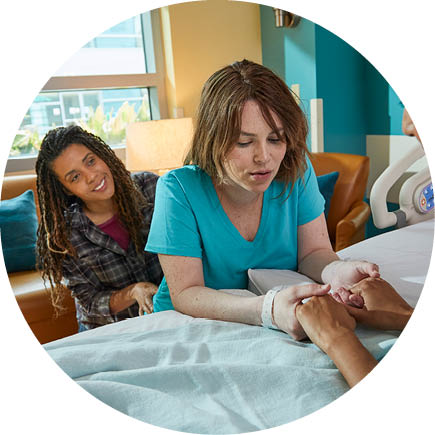
A doula is a trained, nonmedical professional. They provide companionship and give physical, emotional, and informational support during pregnancy, birth, and postpartum recovery. Doulas focus on your well-being and offer consistent support through all stages of pregnancy and birth, including in cases of pregnancy loss or abortion.
How a doula can support you
A doula can support you and your family during pregnancy, birth, and the postpartum period. They can help you understand your care options and review your birth preferences, which you’ll share with your care team. Doulas won’t make clinical decisions for you, but they can help you communicate with your care team.
Doulas support you in creating a calm environment to help labor progress. People who give birth with doulas tend to have shorter labors and fewer cesarean deliveries, and they’re less likely to ask for pain-relief medication.1
Doulas can offer various types of support, including:
- Preparation — Helping you understand and prepare for the birth process
- Birth preferences — Helping you decide on your preferences for your birth experience, including pain management and newborn feeding
- Labor coaching — Offering nonmedical techniques (such as touch, positioning, and breathing exercises) to help you relax, cope with pain, and progress through labor
- Postpartum support — Providing guidance with breastfeeding and newborn care, as well as support transitioning to life with your new baby
How to find a doula
Selecting a doula is an important and personal decision. Here are some steps to help you find a doula to support your birth experience.
Contact these organizations to learn about doulas in your area:
- Doula Love, 503-766-3495 (TTY 711)
- Community Doula Alliance, 503-334-0637 (TTY 711)
- Interview doulas. Set up phone calls with a few doulas. Ask about their experience, philosophy, and approach to birth.
- Make your decision. Choose the doula who best fits your needs.
What to look for in a doula
It’s important to choose a doula you feel comfortable with. When you select a doula, make sure they work near your home and the hospital where you plan to deliver. They should also be available on your estimated due date.
Doulas will have training or experience in:
- Prenatal support
- The process of pregnancy and birth
- Nonmedical comfort measures and labor support techniques
- Breastfeeding support
- Adult/infant cardiopulmonary resuscitation (CPR) certification
- Health Insurance Portability and Accountability Act (HIPAA) privacy rules
Find out if your plan covers doula services
Services from Doula Love or Community Doula Alliance doulas are covered at no extra cost for Oregon members on certain Oregon-based plans.2
See your Evidence of Coverage for details about your plan’s coverage. If you have questions about the doula benefit, call Member Services at 1-800-813-2000 (TTY 711), 8 a.m. to 6 p.m. weekdays (except major holidays).
Some services, including but not limited to those listed below, aren’t covered under your doula benefit. If you get these services from a doula, you’ll need to pay for them.
- Any services from a doula who isn’t part of Doula Love or Community Doula Alliance
- Clinical or medical services (like taking blood pressure or temperature, fetal heart tone checks, vaginal exams, or postpartum clinical care)
- Help with activities of daily living (like shopping or laundry)
- Alternative or complementary services (like aromatherapy, birth education, or massage therapy)
- Yoga
- Birthing ceremonies (like sealing or closing the bones)
- Over-the-counter supplies or drugs
- Home birth
- Belly binding (traditional or ceremonial)
- Massage (maternal or infant)
- Photography
- Placenta encapsulation
- Vaginal steams
- Group classes on baby wearing
If your plan covers doula services, there’s no copay, deductible, or coinsurance.3 Kaiser Permanente won’t bill you for covered doula services.
You can get prenatal and postpartum doula services virtually or in person. In-person visits can be anywhere, including in your home or at the doula’s office. Doulas can also come with you to appointments with your Kaiser Permanente care team. During your labor and birth, your doula should support you in person.
No. You don’t need to ask your doctor to see a doula.
If you plan to have a doula support you during labor and birth, let your care team know ahead of time and mention your doula in your birth preferences.
Doulas aren’t medical providers. Midwives and doctors are licensed medical professionals who provide prenatal, childbirth, and postpartum clinical care.
Pregnancy health resources
Footnotes
1State Strategies for Preventing Pregnancy-Related Deaths: A Guide for Moving Maternal Mortality Review Committee Data to Action, Centers for Disease Control and Prevention, May 2022.
2Included plans: Commercial Group and Individual plans. Please contact Member Services if you are unsure if this benefit applies to you to determine if you qualify, at 503-813-2000. You can also see your Evidence of Coverage for details about your plan’s coverage.
3For high deductible health plans, these services are subject to the plan deductible.
4If you’re experiencing a mental health crisis, call or text 988 and you’ll be connected to a trained crisis counselor. You can also call or text 988 if you’re worried about a loved one.
Connecting to care
Call us 24/7 and talk with a licensed care clinician about your questions or concerns. Find your local phone number below.