


 Sign out
Genetic counseling helps woman with Lynch syndrome manage cancer risk
After learning she had Lynch syndrome, a genetic condition that increases cancer risk, genetic counseling helped her be proactive about her health.
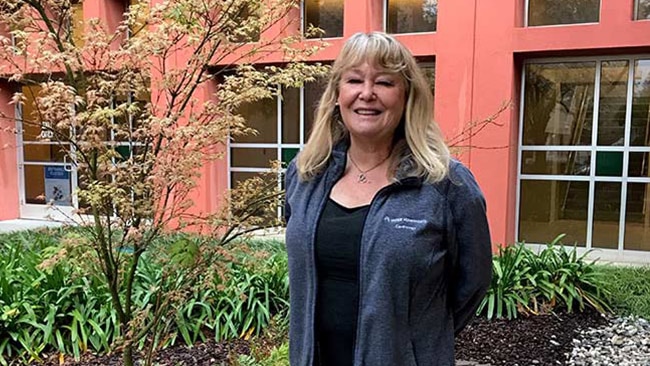
Karen Betzler shares a lot with her brothers and sisters. All 6 have hazel eyes, freckles, and a love of swimming and board games.
Four years ago, she learned that 5 of the 6 siblings have something else in common: an inherited condition called Lynch syndrome.
What is Lynch syndrome?
Lynch syndrome is an inherited disorder caused by changes in certain genes. People with Lynch syndrome are at high risk of developing colorectal cancer, often before the age of 50. According to the Centers for Disease Control and Prevention, about 1 in 280 people has Lynch syndrome.
People with Lynch syndrome are also at risk of developing other cancers.
“The genes involved in Lynch syndrome are called mismatch repair genes,’’ explained Laura Kellogg, who is a genetic counselor at Kaiser Permanente. "Their job is to fix damage, also known as a gene mutation, that occurs to your genetic material, or DNA. If the mismatch genes aren't working properly, then they can’t fix the damage, and the damage can lead to cancer."
Genetic testing and preventive care
"I was shocked to learn I had Lynch syndrome," said Betzler, who worked as a sonographer at the Kaiser Permanente Sacramento Medical Center in Northern California before retiring.
But the bad news came with a silver lining. Betzler was referred to Kellogg for genetic counseling. She also began receiving annual colonoscopies to check her colon and rectum for any signs of cancer. She receives an endoscopy every 2 years to check for cancer in her stomach and esophagus.
Women with Lynch syndrome may also need regular screenings for reproductive cancers. Betzler does not because she has had a hysterectomy.
Know your cancer risk
Telling your doctor about your risk factors can help you decide if and when to be tested. Genetic testing for Lynch syndrome is recommended if you have:
- Colorectal cancer before the age 65 or uterine cancer before menopause
- Two or more colorectal or other Lynch-related cancers
- A relative with Lynch syndrome
- More than one relative on one side of the family with colorectal or uterine cancers
In Betzler's case, her sister had been diagnosed with Lynch syndrome after learning she had colon cancer. "We tested Karen for the same gene mutation, and the results were positive," Kellogg said.
Connected care
Betzler appreciated the convenience of receiving care within Kaiser Permanente's connected system.
"There was no delay in having any of the testing done. Whether it was a blood test or a colonoscopy, everything happens right here," she said.
The option of using telehealth for some appointments was another timesaver. "I didn't have to take extra time out of my day to get to the doctor's office," she said.
There was no delay in having any of the testing done. Whether it was a blood test or a colonoscopy, everything happens right here. Karen Betzler
Managing genetic cancer risk
Everyone can benefit from healthy habits that can reduce risks for cancer, such as living smoke-free, maintaining a healthy body weight, and limiting alcohol consumption. But for people with Lynch syndrome, Kellogg says, a healthy lifestyle and routine cancer screening isn’t enough.
“A personalized health care plan based on genetic test results and family cancer history can help to manage cancer risks and allow for early cancer detection and treatment,” she said.
Kellogg credits Kaiser Permanente's team approach with ensuring the best care for patients like Betzler. Multidisciplinary review boards of cancer specialists meet regularly to discuss complex cases. That allows us to make informed decisions," she said.
If you think you may have an inherited predisposition for cancer, be sure to tell your doctor.
"Having that information allows you to be more proactive," said Kellogg. "You can take concrete steps to manage your risk."
Learn more about cancer care at Kaiser Permanente.