The tuberculosis (TB) skin test can tell if you have TB bacteria in your body. Tuberculosis (TB) is a bacterial infection that can damage the lungs or other parts of the body.
Many people are exposed to TB and test positive for TB bacteria in their bodies, but they don't get the disease. TB bacteria can stay in your body without making you sick. This is because your immune system can keep TB in check.
Why is the test done?
Your doctor may want you to have this test if you have been in close contact with someone who has tuberculosis (TB). You may also have the test if you have symptoms that might be causing TB. These include a cough that doesn't go away and unexplained weight loss.
How do you prepare for the test?
In general, there's nothing you have to do before this test, unless your doctor tells you to.
How is the test done?
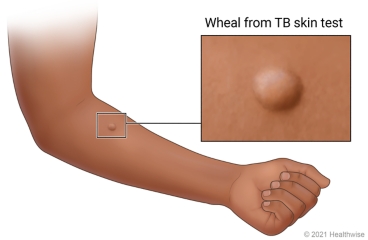
For a tuberculin skin test, you sit down and turn the inner side of your forearm up. The skin where the test is done is cleaned and allowed to dry. A small shot of the tuberculosis antigen (purified protein derivative, or PPD) is put under the top layer of skin. The fluid makes a little bump (wheal) under the skin. A circle may be drawn around the test area with a pen.
What happens after the test?
Do not cover the site with a bandage.
You must see your doctor 2 to 3 days after the test to have the skin test checked. If you have TB in your body, a firm red bump will form at the shot site within 2 days.
If the test shows that you are infected with TB (positive), your doctor probably will order more tests. A TB-positive skin test can't tell when you became infected with TB. And it can't tell whether the infection can be passed to others.
How can you care for yourself at home?
Do not scratch the test site. Scratching it may cause redness or swelling. This could affect the test results.
To ease itching, put a cold washcloth on the site. Then pat the site dry.
Do not cover the test site with a bandage or other dressing.
Follow-up care is a key part of your treatment and safety. Be sure to make and go to all appointments, and call your doctor if you are having problems. Ask your doctor when you can expect to have your test results.
Clinical Review Board All Healthwise education is reviewed by a team that includes physicians, nurses, advanced practitioners, registered dieticians, and other healthcare professionals.
Clinical Review Board All Healthwise education is reviewed by a team that includes physicians, nurses, advanced practitioners, registered dieticians, and other healthcare professionals.
This information does not replace the advice of a doctor. Ignite Healthwise, LLC disclaims any warranty or liability for your use of this information. Your use of this information means that you agree to the Terms of Use and Privacy Policy.
The Health Encyclopedia contains general health information. Not all treatments or services described are covered benefits for Kaiser Permanente members or offered as services by Kaiser Permanente. For a list of covered benefits, please refer to your Evidence of Coverage or Summary Plan Description. For recommended treatments, please consult with your health care provider.


 Sign out