Overview
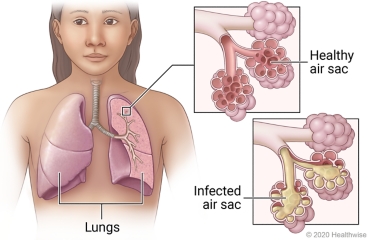
Pneumonia is a lung infection usually caused by viruses or bacteria. Pneumonia may be mild or severe.
If it is caused by bacteria, you will be treated with antibiotics. Antibiotics don't help viral pneumonia. Sometimes antiviral medicine may be used.
Rest, over-the-counter pain medicine, healthy food, and plenty of fluids will help your child recover at home.
It may take a few weeks to a few months to recover fully from pneumonia. It depends on how sick you were and your overall health.
Follow-up care is a key part of your treatment and safety. Be sure to make and go to all appointments, and contact your doctor if you are having problems. It's also a good idea to know your test results and keep a list of the medicines you take.
How can you care for yourself at home?
- Be safe with medicines. Read and follow all instructions on the label.
- Take your antibiotics exactly as directed. Do not stop taking the medicine just because you are feeling better. You need to take the full course of antibiotics.
- Take your medicines exactly as prescribed. Call your doctor if you think you are having a problem with your medicine.
- Take an over-the-counter pain medicine, such as acetaminophen (Tylenol), ibuprofen (Advil, Motrin), or naproxen (Aleve).
- Do not take two or more pain medicines at the same time unless the doctor told you to. Many pain medicines have acetaminophen, which is Tylenol. Too much acetaminophen (Tylenol) can be harmful.
- Be careful with cough and cold medicines. A cough that brings up mucus from your lungs is common with pneumonia. It is one way your body gets rid of the infection. But if coughing keeps you from resting or causes severe fatigue and chest-wall pain, talk to your doctor. Your doctor may suggest that you take a medicine to reduce the cough.
- Get plenty of rest and sleep. You may feel weak and tired for a while, but your energy level will improve with time.
- To prevent dehydration, drink plenty of fluids. Choose water and other clear liquids until you feel better. If you have kidney, heart, or liver disease and have to limit fluids, talk with your doctor before you increase the amount of fluids you drink.
- Use a vaporizer or humidifier to add moisture to your bedroom. Follow the directions for cleaning the machine.
- Do not smoke or vape, and avoid being around others who are smoking or vaping. If you need help quitting, talk to your doctor about stop-smoking programs and medicines. These can increase your chances of quitting for good.
- If you were given a spirometer to measure how well your lungs are working, use it as instructed. This can help your doctor tell how your recovery is going.
When should you call for help?
Call 911 anytime you think you may need emergency care. For example, call if:
- You have severe trouble breathing.
Contact your doctor now or seek immediate medical care if:
- You have new or worse trouble breathing.
- You are dizzy or lightheaded, or you feel like you may faint.
- You cough up dark brown or bloody mucus (sputum).
- You have a new or higher fever.
- You have a new rash.
Watch closely for changes in your health, and be sure to contact your doctor if:
- You do not get better as expected.
Where can you learn more?
Go to http://www.healthwise.net/patientEd
Enter A352 in the search box to learn more about "Pneumonia in Teens: Care Instructions".
Current as of: February 27, 2026
Author: Ignite Healthwise, LLC Staff
Clinical Review Board
All Ignite Healthwise, LLC education is reviewed by a team that includes physicians, nurses, advanced practitioners, registered dieticians, and other healthcare professionals.