Sign out

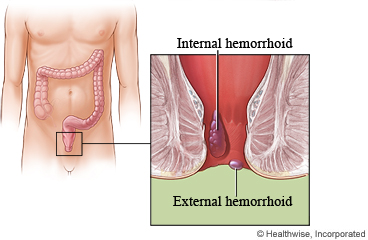
How can you care for yourself at home?
 Activity
- Rest when you feel tired.
- Be active. Walking is a good choice.
- Allow your body to heal. Don't move quickly or lift anything heavy until you are feeling better.
- You may take showers and baths as usual. Pat your anal area dry when you are done.
- You will probably need to take 1 to 2 weeks off work. It depends on the type of work you do and how you feel.
 Diet
Diet
- Follow your doctor's instructions about eating after surgery.
- Start adding high-fiber foods to your diet 2 or 3 days after your surgery. This will make bowel movements easier. And it lowers the chance that you will get hemorrhoids again.
- If your bowel movements are not regular right after surgery, try to avoid constipation and straining. Drink plenty of water. Your doctor may suggest fiber, a stool softener, or a mild laxative.
 Medications
- Your doctor will tell you if and when you can restart your medicines. He or she will also give you instructions about taking any new medicines.
- If you stopped taking aspirin or some other blood thinner, your doctor will tell you when to start taking it again.
- Be safe with medicines. Read and follow all instructions on the label.
- If the doctor gave you a prescription medicine for pain, take it as prescribed.
- If you are not taking a prescription pain medicine, ask your doctor if you can take an over-the-counter medicine.
- If your doctor prescribed antibiotics, take them as directed. Do not stop taking them just because you feel better. You need to take the full course of antibiotics.
- You may apply numbing medicines before and after bowel movements to relieve pain.
 Other instructions
- Sit in a few inches of warm water (sitz bath) for 15 to 20 minutes 3 times a day and after bowel movements. Then pat the area dry. Do this as long as you have pain in your anal area.
- Avoid sitting on the toilet for long periods of time or straining during bowel movements.
- Keep your anal area clean.
- Support your feet with a small step stool when you sit on the toilet. This helps flex your hips and places your pelvis in a squatting position. This can make bowel movements easier after surgery.
- Use baby wipes or medicated pads, such as Tucks, instead of toilet paper after a bowel movement. These products do not irritate the anus.
- If your doctor recommends it, use an over-the-counter hydrocortisone cream on the skin in your anal area. This can reduce pain and itching after surgery.
- Apply ice several times a day for 10 minutes at a time.
- Try lying on your stomach with a pillow under your hips to decrease swelling.
When should you call for help?

Call 911 anytime you think you may need emergency care. For example, call if:
- You passed out (lost consciousness).
- You are short of breath.
Call your doctor now or seek immediate medical care if:
- You have signs of infection, such as:
- Increased pain, swelling, warmth, or redness.
- Red streaks leading from the area.
- Pus draining from the area.
- A fever.
- You have pain that does not get better after you take your pain medicine.
- You are sick to your stomach and cannot keep fluids down.
- You have signs of a blood clot in your leg (called a deep vein thrombosis), such as:
- Pain in your calf, back of the knee, thigh, or groin.
- Redness and swelling in your leg or groin.
- You cannot pass stools or gas.
Watch closely for changes in your health, and be sure to contact your doctor if you have any problems.
Current as of: July 26, 2023
Author: Ignite Healthwise, LLC Staff
Clinical Review Board
All Healthwise education is reviewed by a team that includes physicians, nurses, advanced practitioners, registered dieticians, and other healthcare professionals.