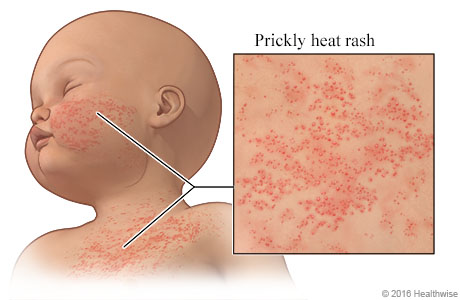
Heat rash (also called prickly heat rash) is a rash of red or pink dots. The skin around the dots may look red. In darker skin it may look purplish. The rash is most often found on body areas covered by clothing. The rash can form when the sweat ducts become blocked, trapping sweat under the skin. This often leads to discomfort and itching.
Heat rash is most common in babies and young children. It can happen when children are dressed too warmly, especially in very hot weather. Dress your child as you would dress yourself for comfort.
Heat rash often appears on the neck or trunk but can be in other areas. The rash can be irritated by clothing or scratching. In rare cases, the skin can get infected.
Most heat rashes heal on their own.
Follow-up care is a key part of your child's treatment and safety. Be sure to make and go to all appointments, and contact your doctor if your child is having problems. It's also a good idea to know your child's test results and keep a list of the medicines your child takes.
How can you care for your child at home?
To help relieve symptoms
Start by removing or loosening your child's clothing. Move your child to a cool, shady spot.
Let the skin air-dry instead of using towels.
Avoid ointments or other lotions. They can irritate the skin.
To help prevent heat rash
Dress your child in as few clothes as possible during hot weather.
Keep your child's skin cool and dry.
Keep your child's sleeping area cool.
When should you call for help?
Contact your doctor now or seek immediate medical care if:
Your child's rash seems to be getting worse.
Your child has a fever.
Watch closely for changes in your child's health, and be sure to contact your doctor if:
Your child's rash doesn't go away after 3 or 4 days.
Clinical Review Board All Ignite Healthwise, LLC education is reviewed by a team that includes physicians, nurses, advanced practitioners, registered dieticians, and other healthcare professionals.


This information does not replace the advice of a doctor. Ignite Healthwise, LLC disclaims any warranty or liability for your use of this information. Your use of this information means that you agree to the Terms of Use and Privacy Policy.
The Health Encyclopedia contains general health information. Not all treatments or services described are covered benefits for Kaiser Permanente members or offered as services by Kaiser Permanente. For a list of covered benefits, please refer to your Evidence of Coverage or Summary Plan Description. For recommended treatments, please consult with your health care provider.