Overview
A heart attack is an event that occurs when part of the heart muscle does not get enough blood and oxygen. This part of the heart starts to die. A heart attack is also called a myocardial infarction, or MI.
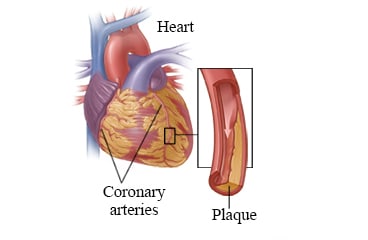
A heart attack most often happens because blood flow through one or more of the coronary arteries is blocked or reduced. This blockage or reduction is usually caused by a blood clot that forms when plaque in the artery breaks open.
After a heart attack, you may be worried about your future. Over the next several weeks, your heart will start to heal. Though it can be hard to break old habits, you can reduce your risk of having another heart attack. You can do this by making some lifestyle changes and by taking medicines.
Follow-up care is a key part of your treatment and safety. Be sure to make and go to all appointments, and contact your doctor if you are having problems. It's also a good idea to know your test results and keep a list of the medicines you take.
How can you care for yourself at home?
Activity
- Until your doctor says it is okay, do not do strenuous exercise. And do not lift, pull, or push anything heavy. Ask your doctor what types of activities are safe for you.
- If your doctor has not set you up with a cardiac rehabilitation (rehab) program, talk to your doctor about whether that is right for you. Cardiac rehab includes supervised exercise. It also includes help with diet and lifestyle changes and emotional support. It may reduce your risk of future heart problems.
- Increase your activities slowly. Take short rest breaks when you get tired.
- If your doctor recommends it, get more exercise. For many people, walking is a good choice. Bit by bit, increase the amount you walk every day. Try for at least 30 minutes on most days of the week. You also may want to swim, bike, or do other activities. Talk with your doctor before you start an exercise program to make sure it is safe for you.
- Ask your doctor when you can drive, go back to work, and do other daily activities again.
- You can have sex as soon as you feel ready for it. Often this means when you can easily walk around or climb stairs. Talk with your doctor if you have any concerns. If you are taking nitroglycerin, do not take erection-enhancing medicine such as sildenafil (Viagra), tadalafil (Cialis), or vardenafil (Levitra).
Lifestyle changes
- Don't smoke, vape, or use other tobacco or nicotine products. These things increase your risk of another heart attack. If you need help quitting, talk to your doctor about quit programs and medicines. These can increase your chances of quitting for good.
- Eat a heart-healthy diet that is low in saturated fat and salt, and is full of fruits, vegetables and whole-grains. You may get more details about how to eat healthy. But these tips can help you get started.
- Stay at a weight that's healthy for you. Talk to your doctor if you need help losing weight.
Medicines
- Be safe with medicines. Take your medicines exactly as prescribed. Call your doctor if you think you are having a problem with your medicine. You will get more details on the specific medicines your doctor prescribes. Do not stop taking your medicine unless your doctor tells you to. Not taking your medicine might raise your risk of having another heart attack.
- You may need several medicines to help lower your risk of another heart attack. These include:
- Blood pressure medicines such as angiotensin-converting enzyme (ACE) inhibitors, ARBs (angiotensin II receptor blockers), and beta-blockers.
- Cholesterol medicine called statins.
- Aspirin and other blood thinners. These prevent blood clots that can cause a heart attack.
- If your doctor has given you nitroglycerin, keep it with you at all times. If you have angina symptoms, such as chest pain or pressure, sit down and rest. Take the first dose of nitroglycerin as directed. If symptoms get worse or are not getting better within 5 minutes, call 911 right away. Stay on the phone. The emergency operator will tell you what to do.
- Do not take any over-the-counter medicines, vitamins, or herbal products without talking to your doctor first.
Staying healthy
- Manage other health conditions such as high blood pressure and diabetes.
- Avoid infections such as COVID-19, colds, and the flu. Get a pneumococcal vaccine. If you have had one before, ask your doctor whether you need another dose. Get the flu vaccine every year. Stay up to date on your COVID-19 vaccines.
- Be sure to tell your doctor about any angina symptoms you have had, even if they went away. Pay attention to your angina symptoms. Know what is typical for you and learn how to control it. Know when to call for help.
- Talk to your family, friends, or a counselor about your feelings. It is normal to feel frightened, angry, hopeless, helpless, and even guilty. Talking openly about bad feelings can help you cope. If you have symptoms of depression, talk to your doctor.
When should you call for help?
Call 911 anytime you think you may need emergency care. For example, call if:
- You have symptoms of a heart attack. These may include:
- Chest pain or pressure, or a strange feeling in the chest.
- Sweating.
- Shortness of breath.
- Nausea or vomiting.
- Pain, pressure, or a strange feeling in the back, neck, jaw, or upper belly or in one or both shoulders or arms.
- Dizziness, lightheadedness, or sudden weakness.
- A fast or irregular heartbeat.
- You have angina symptoms (such as chest pain or pressure) that do not go away with rest or are not getting better within 5 minutes after you take a dose of nitroglycerin.
- You passed out (lost consciousness).
- You feel like you are having another heart attack.
After you call 911, the operator may tell you to chew 1 adult-strength or 2 to 4 low-dose aspirin. Wait for an ambulance. Do not try to drive yourself.
Where can you learn more?
Go to http://www.healthwise.net/patientEd
Enter H564 in the search box to learn more about "Heart Attack: Care Instructions".
Current as of: October 2, 2025
Author: Ignite Healthwise, LLC Staff
Clinical Review Board
All Ignite Healthwise, LLC education is reviewed by a team that includes physicians, nurses, advanced practitioners, registered dieticians, and other healthcare professionals.