Food Poisoning in Children: Care Instructions

Skip Navigation

Overview

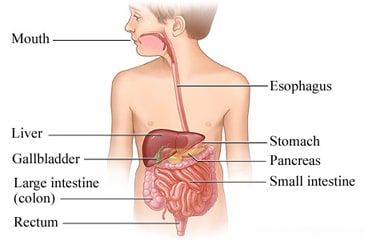
Front of child showing the digestive system.

Food poisoning occurs when you eat foods that contain harmful germs. Food can be contaminated while it is growing, during processing, or when it is prepared. Fresh fruits and vegetables also can be contaminated if they are washed in contaminated water. Your child may have become ill after eating undercooked meat or eggs or other unsafe foods. Cooking foods thoroughly and storing them properly can help prevent food poisoning.

There are many types of food poisoning. Your child's symptoms depend on the type of food poisoning they have. Your child will probably begin to feel better in a few days. In the meantime, make sure your child gets plenty of rest, and make sure that they do not become dehydrated.

Follow-up care is a key part of your child's treatment and safety. Be sure to make and go to all appointments, and contact your doctor if your child is having problems. It's also a good idea to know your child's test results and keep a list of the medicines your child takes.

How can you care for your child at home?

  • Give your child lots of fluids. This is very important if your child is vomiting or has diarrhea. Give your child sips of water or drinks such as Pedialyte or Infalyte. These drinks contain a mix of salt, sugar, and minerals. You can buy them at drugstores or grocery stores. Give these drinks as long as your child is throwing up or has diarrhea. Do not use them as the only source of liquids or food for more than 12 to 24 hours.
  • Watch for and treat signs of dehydration, which means that the body has lost too much water. Your child's mouth may feel very dry. Your child may have sunken eyes with few tears when crying. Your child may lack energy and want to be held a lot. Your child may not urinate as often as usual.
  • Start offering small amounts of food when your child feels like eating again.
  • Wash your hands after changing diapers and before you touch food. Have your child wash hands after using the toilet and before eating.
  • Do not give your child over-the-counter antidiarrhea or upset-stomach medicines without talking to your doctor first. Pepto-Bismol or other medicines may contain salicylates, a form of aspirin. Do not give aspirin to children and teens. It has been linked to Reye syndrome, a rare but serious illness.
  • Have your child take medicines exactly as prescribed. Call your doctor if you think your child is having a problem with a medicine.

To prevent food poisoning

  • Keep hot foods hot and cold foods cold.
  • Do not let your child eat meats, dressings, salads, or other foods that have been kept at room temperature for more than 2 hours.
  • Use a thermometer to check your refrigerator. It should be between 34°F and 40°F.
  • Defrost meats in the refrigerator or microwave, not on the kitchen counter.
  • Keep your hands and your kitchen clean. Wash your hands, cutting boards, and countertops with hot, soapy water.
  • If you use the same cutting board for chopping vegetables and preparing raw meat, be sure to wash the cutting board with hot, soapy water between each use.
  • Cook meat until it is well done.
  • Do not let your child eat raw eggs or uncooked dough or sauces made with raw eggs.
  • Do not take chances. If you think food looks or tastes spoiled, throw it out.

When should you call for help?

Call 911 anytime you think your child may need emergency care. For example, call if:

  • Your child passes out (loses consciousness).
  • Your child has trouble breathing.
  • Your child vomits blood or what looks like coffee grounds.

Contact your doctor now or seek immediate medical care if:

  • Your child is very sleepy or confused.
  • Your child has new or worse belly pain.
  • Your child has a fever.
  • There is a new or increasing yellow tint to their skin or the whites of their eyes.
  • Your child has any abnormal bleeding, such as:
    • Nosebleeds.
    • If they get periods, vaginal bleeding that is different (heavier, more frequent, at a different time of the month) than what they are used to.
    • Bloody or black stools or rectal bleeding.
    • Bloody or pink urine.
  • Your child has symptoms of dehydration, such as:
    • Dry eyes and a dry mouth.
    • Passing only a little urine.
    • Feeling thirstier than usual.
  • Your child cannot keep fluids down.

Watch closely for changes in your child's health, and be sure to contact your doctor if:

  • Your child's belly is getting bigger.
  • Your child's symptoms get worse.

Where can you learn more?

Go to http://www.healthwise.net/patientEd

Enter T416 in the search box to learn more about "Food Poisoning in Children: Care Instructions".

Current as of: February 27, 2026

Author: Ignite Healthwise, LLC Staff

Clinical Review Board
All Ignite Healthwise, LLC education is reviewed by a team that includes physicians, nurses, advanced practitioners, registered dieticians, and other healthcare professionals.


Current as of: February 27, 2026

Author: Ignite Healthwise, LLC Staff

Clinical Review Board
All Ignite Healthwise, LLC education is reviewed by a team that includes physicians, nurses, advanced practitioners, registered dieticians, and other healthcare professionals.

The Health Encyclopedia contains general health information. Not all treatments or services described are covered benefits for Kaiser Permanente members or offered as services by Kaiser Permanente. For a list of covered benefits, please refer to your Evidence of Coverage or Summary Plan Description. For recommended treatments, please consult with your health care provider.