Bruises in Children: Care Instructions

Skip Navigation

Overview

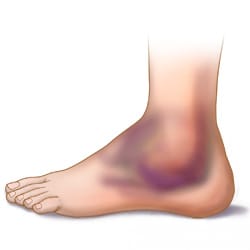
Picture of a bruised ankle

Bruises (contusions) occur when small blood vessels under the skin break open, most often from a fall or being hit by something. Blood leaks into tissues under the skin and causes a black-and-blue color that often turns colors, including purple, red, yellow, or green, as the bruise heals.

Bruises hurt, but most aren't serious and will go away on their own within 2 to 4 weeks. Sometimes gravity causes them to spread down the body. For example, a bruise on the leg may spread down into the ankle or foot. A leg bruise usually will take longer to heal than a bruise on the face or arms.

Follow-up care is a key part of your child's treatment and safety. Be sure to make and go to all appointments, and contact your doctor if your child is having problems. It's also a good idea to know your child's test results and keep a list of the medicines your child takes.

How can you care for your child at home?

  • Put ice or a cold pack on the area for 10 to 20 minutes at a time. Put a thin cloth between the ice or cold pack and your child's skin.
  • If you can, prop up the bruised area on pillows as much as possible for the next few days. Try to keep the bruise above the level of your child's heart.
  • Be safe with medicines. Read and follow all instructions on the label.
    • If your child is not taking a prescription pain medicine, ask your doctor if your child can take an over-the-counter medicine.
    • If the doctor gave your child a prescription medicine for pain, give it as prescribed.
    • Do not give aspirin to children and teens. It has been linked to Reye syndrome, a rare but serious illness.
    • Store your child’s prescription pain medicines where no one else can get to them. When you are done using them, dispose of them quickly and safely. Your local pharmacy or hospital may have a drop-off site.

When should you call for help?

Contact your doctor now or seek immediate medical care if:

  • Your child has symptoms of infection, such as:
    • Increased pain, swelling, warmth, or redness.
    • Red streaks leading from the bruise.
    • Pus draining from the bruise.
    • A fever.
  • Your child has a bruise on the leg and symptoms of a blood clot, such as:
    • Pain in the calf, back of the knee, thigh, or groin.
    • Swelling in the leg or groin.
    • A color change on the leg or groin. The skin may be reddish or purplish.
  • Your child's pain gets worse.

Watch closely for changes in your child's health, and be sure to contact your doctor if:

  • Your child does not get better as expected.
  • You have concerns about how the injury happened.

Where can you learn more?

Go to http://www.healthwise.net/patientEd

Enter T644 in the search box to learn more about "Bruises in Children: Care Instructions".

Current as of: October 1, 2025

Author: Ignite Healthwise, LLC Staff

Clinical Review Board
All Ignite Healthwise, LLC education is reviewed by a team that includes physicians, nurses, advanced practitioners, registered dieticians, and other healthcare professionals.


Current as of: October 1, 2025

Author: Ignite Healthwise, LLC Staff

Clinical Review Board
All Ignite Healthwise, LLC education is reviewed by a team that includes physicians, nurses, advanced practitioners, registered dieticians, and other healthcare professionals.

The Health Encyclopedia contains general health information. Not all treatments or services described are covered benefits for Kaiser Permanente members or offered as services by Kaiser Permanente. For a list of covered benefits, please refer to your Evidence of Coverage or Summary Plan Description. For recommended treatments, please consult with your health care provider.