Overview
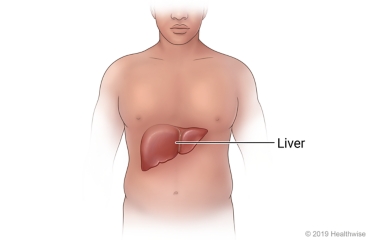
Alcohol-associated hepatitis is a condition that damages the liver. It happens when long-term heavy drinking makes the liver swollen and inflamed. Over time, this harms the liver and can lead to scarring. The scarring is called cirrhosis. An inflamed or scarred liver can't remove waste products from the body. Toxins can build up in the body.
If drinking is stopped before the liver is severely damaged, your liver may get better. You may have to make changes in your diet and take medicines.
Follow-up care is a key part of your treatment and safety. Be sure to make and go to all appointments, and contact your doctor if you are having problems. It's also a good idea to know your test results and keep a list of the medicines you take.
How can you care for yourself at home?
- Do not drink alcohol. Alcohol can damage the liver. Tell your doctor if you need help to quit. Counseling, support groups, and sometimes medicines can help you stay sober.
- Be safe with medicines. Take your medicines exactly as prescribed. Call your doctor if you think you are having a problem with your medicine. You will get more details on the specific medicines your doctor prescribes.
- Do not take any over-the-counter medicines, including ibuprofen (Advil, Motrin), naproxen (Aleve), and acetaminophen (Tylenol), unless your doctor tells you to.
- Make sure your doctor knows all of the medicines, vitamins, supplements, and herbal remedies you take.
- Follow your doctor's instructions about healthy eating. See a dietitian if you need help choosing the right foods.
When should you call for help?
Call 911 anytime you think you may need emergency care. For example, call if:
- You have trouble breathing.
- You vomit blood or what looks like coffee grounds.
Contact your doctor now or seek immediate medical care if:
- You feel very sleepy or confused.
- You have a fever.
- There is a new or increasing yellow tint to your skin or the whites of your eyes.
- You have new or worse belly pain.
- You have any abnormal bleeding, such as:
- Nosebleeds.
- Vaginal bleeding that is different (heavier, more frequent, at a different time of the month) than what you are used to.
- Bloody or black stools, or rectal bleeding.
- Bloody or pink urine.
Watch closely for changes in your health, and be sure to contact your doctor if:
- Your belly is getting bigger.
- You are gaining weight.
Where can you learn more?
Go to http://www.healthwise.net/patientEd
Enter S060 in the search box to learn more about "Alcohol-Associated Hepatitis: Care Instructions".
Current as of: January 26, 2026
Author: Ignite Healthwise, LLC Staff
Clinical Review Board
All Ignite Healthwise, LLC education is reviewed by a team that includes physicians, nurses, advanced practitioners, registered dieticians, and other healthcare professionals.