


 Sign out
Surviving breast cancer inspired a passion for patient advocacy
Kaiser Permanente’s patient advisory councils help us create exceptional experiences by letting patients provide feedback on upcoming care initiatives.
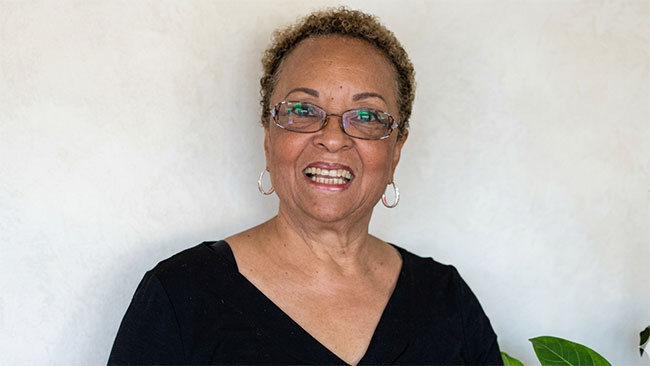
Jerilyn Crain is a proud member of her local patient advisory council.
In 2002, Jerilyn Crain's life changed forever. She found out she had HER2-positive, ER- and PR-negative breast cancer, which is a form of cancer that grows quickly.
"From the beginning, I looked for support groups for cancer patients. But there was nothing out there. So, I started one myself," said Crain.
She held her support group on a bus that took patients to get cancer treatment. The patients had fun together and celebrated each time someone finished their cancer treatment.
After Crain finished her own treatment, she kept helping other patients who had cancer. She started hosting her cancer support group in her home. Her care team even sent new patients with cancer to join her group.
Becoming a patient partner
In 2007, doctors and patients at Bellflower and Downey medical centers teamed up to create Kaiser Permanente’s first patient advisory council in Southern California. Crain's doctor asked her to join as a patient partner.
A patient advisory council is a group of patients who volunteer their time to help improve care at Kaiser Permanente. These patient partners meet with our staff to talk about new programs, projects, and improvements. Their feedback helps us provide care that fits what our patients need and want.
Crain comes from a family of people who work in health care, so it was a perfect fit. As a patient partner, Crain is happy to share ideas to help other members, like her own loved ones. Her work has become even more important to her now that she is a certified caregiver.
"My whole life has been about listening to the voice of the patient,” said Crain.
Patient advocacy comes first
The patient advisory councils have been a big success. Today, Kaiser Permanente has over 100 patient advisory councils with more than 1,700 patient partners. Some of their recent projects include:
- Planning webinars to raise awareness about supporting Black mothers
- Giving feedback on Kaiser Permanente’s cancer care strategy
- Finding the best way to share test results so that patients fully understand them
These projects and our patient partners help us give our members high-quality care and experiences every day.
Councils help to prioritize equity in health care
One of the best parts of our patient advisory councils is that their members come from many different backgrounds. La Shawna Williams, MD, physician leader for the Regional Patient Advisory Council, says our patient partners help us provide care that respects the needs of different people and cultures.
"Our members all come from different backgrounds, with needs as diverse as they are. But you don't know what those needs are unless you ask them. That’s why it's so important that we hear directly from a diverse set of patients," said Dr. Williams.
Linda Fahey, administrative lead for the Regional Patient Advisory Council, says the councils help Kaiser Permanente improve the care experience for everyone.
"It's the little things that affect our members' opinion of us. By listening to our patient partners, we've been able to make changes that take our members' experience from good to great," said Fahey.
Many Kaiser Permanente locations are looking for patient partners. If you’re interested in joining a patient advisory council near you, reach out to the Kaiser Permanente Person- and Family-Centered Care team.