


 Sign out
How genetic testing helped catch hereditary breast cancer early
Fay Gordon’s breast cancer was caught in the early stages thanks to genetic testing through Kaiser Permanente’s hereditary cancer program.
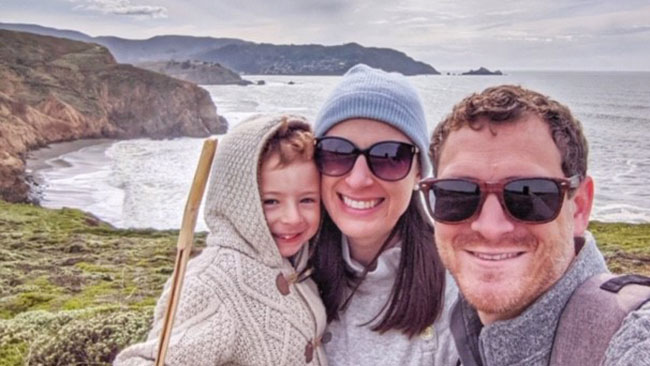
Genetic counseling and an enhanced screening program helped Fay Gordon (pictured here with her husband, David, and son Diego) make informed choices.
When Fay Gordon learned she had breast cancer at age 35, she was scared but not surprised.
Cancer runs in her family. “My mom’s mom passed away from breast cancer when she was 44,” said Gordon. “The knowledge of her passing loomed large in my life growing up.”
Several other family members had received cancer diagnoses over the years as well.
But it wasn’t only her family history of cancer that readied her for the news. Gordon’s ob-gyn had referred her to Kaiser Permanente’s hereditary cancer program.
The power of hereditary cancer programs
Patients who take part in the hereditary cancer program learn about their genetic risk for certain kinds of cancer. They often start getting screened to catch cancer early based on their specific risk factors. And they learn about various medical and surgical options to reduce their risk of cancer.
They’re also connected to a team of specialists who help coordinate all aspects of their care. These teams can include a genetic counselor, a surgeon, a gynecologist, and a plastic surgeon, as well as a therapist or social worker who can provide mental health care.
“It takes a unique health care system to support multidisciplinary clinics like these,” explained Christine Garcia, MD, who leads Kaiser Permanente’s hereditary cancer program in Northern California.
“It doesn’t happen in most settings,” Dr. Garcia continued, “but with our collaborative culture and support from our leaders, we consult together as a team.”
Genetic testing offers a personalized plan
Gordon’s genetic test revealed that she had a CHEK2 gene mutation. This meant she had a higher risk of both breast cancer and colon cancer.
CHEK2 genes help repair DNA damage and suppress the growth of tumors. Hereditary changes in these genes can affect their ability to help prevent cancer.
CHEK2 mutations are more common than BRCA gene mutations, but they have a more moderate impact on breast cancer risk, so they’re less well known.
Gordon met with Veronica Shim, MD, hereditary cancer lead at Kaiser Permanente in Oakland, California.
Dr. Shim and the rest of Gordon’s care team designed a personalized early detection plan. This included breast cancer screenings every 6 months with alternating mammograms and MRIs.
“Even though it was scary, I appreciated the regular monitoring,” Gordon explained. “Knowing we had a plan helped me get a sense of control. And regular screenings were the reason we caught the breast cancer so early.”
Later, when Gordon learned she had Stage 1 breast cancer, she felt prepared because of the education and support she had received. She and her care team were ready to address it.
Exploring treatment options for breast cancer
 Gordon recovering and in good spirits after her surgery.
After her diagnosis, she consulted with Dr. Shim. They decided to surgically remove all her breast tissue. This would completely remove the cancer and help prevent a recurrence.
“Dr. Shim understood my fears,” said Gordon. “She calmed me down and gave me and my husband, David, the facts and details we needed. I trusted her so much and knew she was going to get us through it. I will always be so grateful to her for that.”
A week after her surgery, Gordon received word that it had been a success. Her cancer was gone, and no follow-up chemotherapy would be necessary. Her risk of recurrence was less than 2%.
She had breast reconstruction surgery 6 months later.
Less than a year after that, Gordon gave birth to a healthy baby boy.
Breast cancer risk factors
For women with a family history of breast cancer, talking about it can be hard.
“Many patients have unique sensitivities because there have been deaths in the family due to cancer,” said Dr. Garcia. “Sometimes it’s challenging even to talk about the risks because the issues are so intense.”
“But sharing your family’s history of cancer with your doctor is one of the most important things you can do.”
Contact your doctor if your family members have had cancer, especially if they had it before they were 50, or if it occurred in family members from different generations. There are steps you can take to help reduce and manage your cancer risk.
Learn more about genetic testing and cancer care at Kaiser Permanente.