Stomatitis From Cancer Treatment: Care Instructions

Skip Navigation

Overview

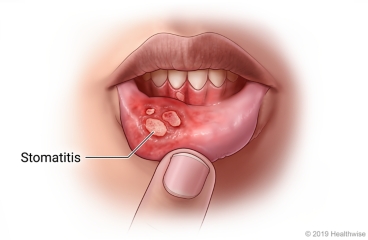
Inside of the lower lip, showing stomatitis sores.

Stomatitis, also called oral mucositis, is swelling and redness of the lining of your mouth. It can cause painful sores that can make it hard for you to eat, drink, or swallow. It's a common side effect of cancer treatments such as some chemotherapy and radiation. Your doctor may prescribe pain medicines or mouth rinses to treat it.

Having stomatitis can increase the risk of getting an infection in your mouth. This could be caused by bacteria, a virus, or a yeast infection. Medicines can treat this problem.

Follow-up care is a key part of your treatment and safety. Be sure to make and go to all appointments, and contact your doctor if you are having problems. It's also a good idea to know your test results and keep a list of the medicines you take.

How can you care for yourself at home?

  • Be safe with medicines. Read and follow all instructions on the label.
    • If you are not taking a prescription pain medicine, ask your doctor if you can take an over-the-counter medicine.
    • If the doctor gave you a prescription medicine for pain, take it as prescribed.
    • Store your prescription pain medicines where no one else can get to them. When you are done using them, dispose of them quickly and safely. Your local pharmacy or hospital may have a drop-off site.
  • If your doctor prescribed antibiotics or antifungals, take them as directed. Do not stop taking them just because you feel better. You need to take the full course of medicine.
  • Ask your doctor if you can make a mouth rinse at home. Follow their instructions exactly.
  • Use prescription mouth rinses as prescribed.
  • Eat soft foods such as mashed potatoes and other cooked vegetables, noodles, applesauce, clear broth soups, yogurt, and cottage cheese. You can get extra protein by adding protein powder to milkshakes or breakfast drinks. Avoid spicy, crunchy, salty, or sugary foods.
  • Try eating cold foods such as ice cream or frozen yogurt.
  • Drink plenty of fluids to prevent dehydration. Drinking through a straw may help with pain. Avoid high-acid juices such as orange, grapefruit, and cranberry juice. They may make your mouth hurt.
  • Practice good oral hygiene. Use a very soft toothbrush to brush your teeth. You could also use a soft cloth.

When should you call for help?

Contact your doctor now or seek immediate medical care if:

  • You can't eat or drink.
  • You have new or worse pain.
  • You have a fever.

Watch closely for changes in your health, and be sure to contact your doctor if:

  • You do not get better as expected.

Where can you learn more?

Go to http://www.healthwise.net/patientEd

Enter U797 in the search box to learn more about "Stomatitis From Cancer Treatment: Care Instructions".

Current as of: February 27, 2026

Author: WebMD Ignite Staff

Clinical Review Board
All WebMD Ignite education is reviewed by a team that includes physicians, nurses, advanced practitioners, registered dieticians, and other healthcare professionals.


Current as of: February 27, 2026

Author: WebMD Ignite Staff

Clinical Review Board
All WebMD Ignite education is reviewed by a team that includes physicians, nurses, advanced practitioners, registered dieticians, and other healthcare professionals.

The Health Encyclopedia contains general health information. Not all treatments or services described are covered benefits for Kaiser Permanente members or offered as services by Kaiser Permanente. For a list of covered benefits, please refer to your Evidence of Coverage or Summary Plan Description. For recommended treatments, please consult with your health care provider.