Overview
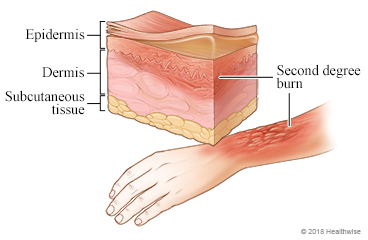
Burns injure the skin and can also injure other parts of your body, such as your muscles, blood vessels, nerves, lungs, and eyes. Burns may also become infected easily. Pain from a burn may get worse in the first few weeks as the burn heals.
The color, texture, and feel of your skin will change as new skin and scar tissue form. You may notice that the burned area feels tight and hard while it is healing. It's important to continue to move the area as the burn heals to prevent loss of motion or loss of function in the area.
Complete healing of a burn may take from a few months to up to a year. Recovering from a burn can be painful and stressful, but there are steps you can take to make sure that the burn heals as well as possible.
Follow-up care is a key part of your treatment and safety. Be sure to make and go to all appointments, and contact your doctor if you are having problems. It's also a good idea to know your test results and keep a list of the medicines you take.
How can you care for yourself at home?
- Follow your doctor's instructions for caring for your burn.
- Wash the area with clean water 2 times a day. Don't use hydrogen peroxide or alcohol. They can slow healing.
- You may need special bandages or a compression garment if you have a very deep burn.
- Protect your burn while it is healing. Cover your burn if you are going out in the cold or the sun.
- Wear long sleeves if the burn is on your hands or arms.
- Wear a hat if the burn is on your face.
- Wear shoes and socks if the burn is on your feet.
- Drink plenty of fluids. If you have kidney, heart, or liver disease and have to limit fluids, talk with your doctor before you increase the amount of fluids you drink.
- Eat healthy foods. Make sure that you are eating foods that have enough calories and protein to promote healing. Ask your doctor if you should take any extra vitamins or other supplements.
- Don’t smoke, vape, or use other tobacco or nicotine products. These things slow healing and recovery. If you need help quitting, talk to your doctor about quit programs and medicines. These can increase your chances of quitting for good.
Medicines
- Be safe with medicines. Read and follow all instructions on the label.
- If you are not taking a prescription pain medicine, ask your doctor if you can take an over-the-counter medicine.
- If the doctor gave you a prescription medicine for pain, take it as prescribed.
- Store your prescription pain medicines where no one else can get to them. When you are done using them, dispose of them quickly and safely. Your local pharmacy or hospital may have a drop-off site.
- If your doctor prescribed antibiotics, take them as directed. Do not stop taking them just because you feel better. You need to take the full course of antibiotics.
- If the burn itches, try not to scratch it. Try an over-the-counter antihistamine. Read and follow all instructions on the label.
When should you call for help?
Contact your doctor now or seek immediate medical care if:
- You have symptoms of infection, such as:
- Increased pain, swelling, warmth, or redness near the burn.
- Red streaks leading from the burn.
- Pus draining from the burn.
- A fever.
- You cannot move the burned area, or the area feels numb.
Watch closely for changes in your health, and be sure to contact your doctor if:
- You do not get better as expected.
Where can you learn more?
Go to http://www.healthwise.net/patientEd
Enter J879 in the search box to learn more about "Major Burns: Care Instructions".
Current as of: January 19, 2026
Author: Ignite Healthwise, LLC Staff
Clinical Review Board
All Ignite Healthwise, LLC education is reviewed by a team that includes physicians, nurses, advanced practitioners, registered dieticians, and other healthcare professionals.