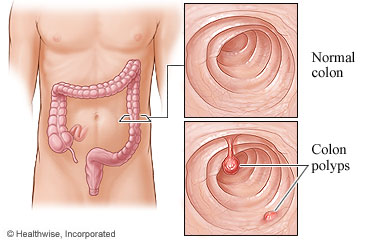
Colon polyps are growths in the colon or the rectum. The cause of most colon polyps is not known, and most people who get them do not have any problems. But a certain kind can turn into cancer. For this reason, regular testing for colon polyps is important for people as they get older. It is also important for anyone who has an increased risk for colon cancer.
Polyps are usually found through routine colon cancer screening tests. Although most colon polyps are not cancerous, they are usually removed and then tested for cancer. Screening for colon cancer saves lives because the cancer can usually be cured if it is caught early.
If you have a polyp that is the type that can turn into cancer, you may need more tests to examine your entire colon. The doctor will remove any other polyps that are found, and you will be tested more often.
Follow-up care is a key part of your treatment and safety. Be sure to make and go to all appointments, and call your doctor if you are having problems. It's also a good idea to know your test results and keep a list of the medicines you take.
How can you care for yourself at home?
Regular exams to look for colon polyps are the best way to prevent polyps from turning into colon cancer. These can include stool tests, sigmoidoscopy, colonoscopy, and CT colonography. Talk with your doctor about a testing schedule that is right for you.
To prevent polyps
There is no home treatment that can prevent colon polyps. But these steps may help lower your risk for cancer.
Stay active. Being active can help you get to and stay at a healthy weight. Try to exercise on most days of the week. Walking is a good choice.
Eat well. Choose a variety of vegetables, fruits, legumes (such as peas and beans), fish, poultry, and whole grains.
Do not smoke. If you need help quitting, talk to your doctor about stop-smoking programs and medicines. These can increase your chances of quitting for good.
If you drink alcohol, limit how much you drink. Limit alcohol to 2 drinks a day for men and 1 drink a day for women.
When should you call for help?
Call your doctor now or seek immediate medical care if:
You have severe belly pain.
Your stools are maroon or very bloody.
Watch closely for changes in your health, and be sure to contact your doctor if:
You have a fever.
You have nausea or vomiting.
You have a change in bowel habits (new constipation or diarrhea).
Your symptoms get worse or are not improving as expected.
Clinical Review Board All Healthwise education is reviewed by a team that includes physicians, nurses, advanced practitioners, registered dieticians, and other healthcare professionals.
Clinical Review Board All Healthwise education is reviewed by a team that includes physicians, nurses, advanced practitioners, registered dieticians, and other healthcare professionals.
This information does not replace the advice of a doctor. Healthwise, Incorporated disclaims any warranty or liability for your use of this information. Your use of this information means that you agree to the Terms of Use and Privacy Policy.
The Health Encyclopedia contains general health information. Not all treatments or services described are covered benefits for Kaiser Permanente members or offered as services by Kaiser Permanente. For a list of covered benefits, please refer to your Evidence of Coverage or Summary Plan Description. For recommended treatments, please consult with your health care provider.


 Sign out