Abscessed Tooth: Care Instructions

Skip Navigation

Overview

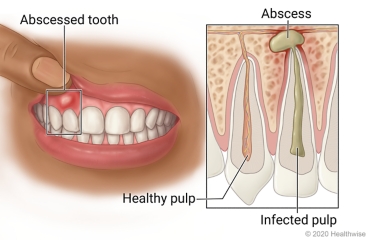
Mouth with abscessed tooth and pocket of pus in gums near it, with inside detail of tooth with healthy pulp and abscessed tooth with infected pulp

An abscessed tooth is a tooth that has a pocket of pus in the tissues around it. Pus forms when the body tries to fight an infection caused by bacteria. If the pus cannot drain, it forms an abscess. An abscessed tooth can cause red, swollen gums and throbbing pain, especially when you chew. You may have a bad taste in your mouth and a fever, and your jaw may swell.

Damage to the tooth, untreated tooth decay, and gum disease can cause an abscessed tooth.

An abscessed tooth needs to be treated by a dental professional right away. The most important treatment is to drain the pus and fix or remove the tooth. Antibiotics are added if the infection is spreading or you have a fever.

Follow-up care is a key part of your treatment and safety. Be sure to make and go to all appointments, and contact your doctor if you are having problems. It's also a good idea to know your test results and keep a list of the medicines you take.

How can you care for yourself at home?

  • Brush and floss gently.
  • Reduce pain and swelling in your face and jaw by putting ice or a cold pack on the outside of your cheek. Do this for 10 to 20 minutes at a time. Put a thin cloth between the ice and your skin.
  • Avoid using tobacco products. Tobacco and nicotine slow your ability to heal.
  • Be safe with medicines. Read and follow all instructions on the label.
    • If you are not taking a prescription pain medicine, ask your doctor if you can take an over-the-counter medicine.
    • If the doctor gave you a prescription medicine for pain, take it as prescribed.
    • Store your prescription pain medicines where no one else can get to them. When you are done using them, dispose of them quickly and safely. Your local pharmacy or hospital may have a drop-off site.
  • Take antibiotics as directed. Do not stop taking them just because you feel better. You need to take the full course of antibiotics.

When should you call for help?

Call 911 anytime you think you may need emergency care. For example, call if:

  • You have trouble breathing.

Contact your doctor now or seek immediate medical care if:

  • You have new or worse symptoms of infection, such as:
    • Increased pain, swelling, warmth, or redness.
    • Red streaks leading from the area.
    • Pus draining from the area.
    • A fever.

Watch closely for changes in your health, and be sure to contact your doctor if:

  • You do not get better as expected.

Where can you learn more?

Go to http://www.healthwise.net/patientEd

Enter L466 in the search box to learn more about "Abscessed Tooth: Care Instructions".

Current as of: February 24, 2026

Author: Ignite Healthwise, LLC Staff

Clinical Review Board
All Ignite Healthwise, LLC education is reviewed by a team that includes physicians, nurses, advanced practitioners, registered dieticians, and other healthcare professionals.


Current as of: February 24, 2026

Author: Ignite Healthwise, LLC Staff

Clinical Review Board
All Ignite Healthwise, LLC education is reviewed by a team that includes physicians, nurses, advanced practitioners, registered dieticians, and other healthcare professionals.

The Health Encyclopedia contains general health information. Not all treatments or services described are covered benefits for Kaiser Permanente members or offered as services by Kaiser Permanente. For a list of covered benefits, please refer to your Evidence of Coverage or Summary Plan Description. For recommended treatments, please consult with your health care provider.