Overview
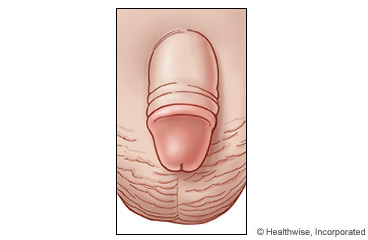
Male genitals can be injured easily. This is because the scrotum and penis aren't protected by bones.
A genital injury can be very painful. But the pain usually goes away quickly. And in most cases, there is no long-term damage.
This type of injury often happens as a result of sports, activities, or falls. Sometimes a young child might play with toys or other objects near the penis. This can cause an accidental injury.
A minor injury can usually be treated at home.
Follow-up care is a key part of your child's treatment and safety. Be sure to make and go to all appointments, and contact your doctor if your child is having problems. It's also a good idea to know your child's test results and keep a list of the medicines your child takes.
How can you care for your child at home?
- Have your child rest. Your child should not do anything that may cause pain or soreness.
- Put ice or a cold pack on the area for 10 to 20 minutes at a time. Put a thin cloth between the ice and your child's skin.
- Be safe with medicines. Read and follow all instructions on the label.
- If your child is not taking a prescription pain medicine, ask your doctor if your child can take an over-the-counter medicine.
- If the doctor gave your child a prescription medicine for pain, give it as prescribed.
- Store your child’s prescription pain medicines where no one else can get to them. When you are done using them, dispose of them quickly and safely. Your local pharmacy or hospital may have a drop-off site.
When should you call for help?
Contact your doctor now or seek immediate medical care if:
- Your child has new or worse pain.
- Your child has new or worse swelling in the scrotum.
- Your child has symptoms of infection, such as:
- Increased pain, swelling, warmth, or redness.
- Red streaks leading from the area.
- Pus draining from the area.
- A fever.
- Your child has symptoms of a urinary tract infection. These may include:
- Pain or burning when your child urinates.
- A frequent need to urinate without being able to pass much urine.
- Pain in the flank, which is just below the rib cage and above the waist on either side of the back.
- Blood in your child’s urine.
- A fever.
Watch closely for changes in your child's health, and be sure to contact your doctor if:
- Your child does not get better as expected.
Where can you learn more?
Go to http://www.healthwise.net/patientEd
Enter P230 in the search box to learn more about "Male Genital Injury in Children: Care Instructions".
Current as of: April 9, 2026
Author: Ignite Healthwise, LLC Staff
Clinical Review Board
All Ignite Healthwise, LLC education is reviewed by a team that includes physicians, nurses, advanced practitioners, registered dieticians, and other healthcare professionals.